Metabolic & Weight Management
Exenatide
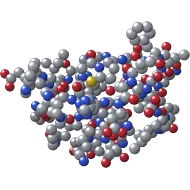
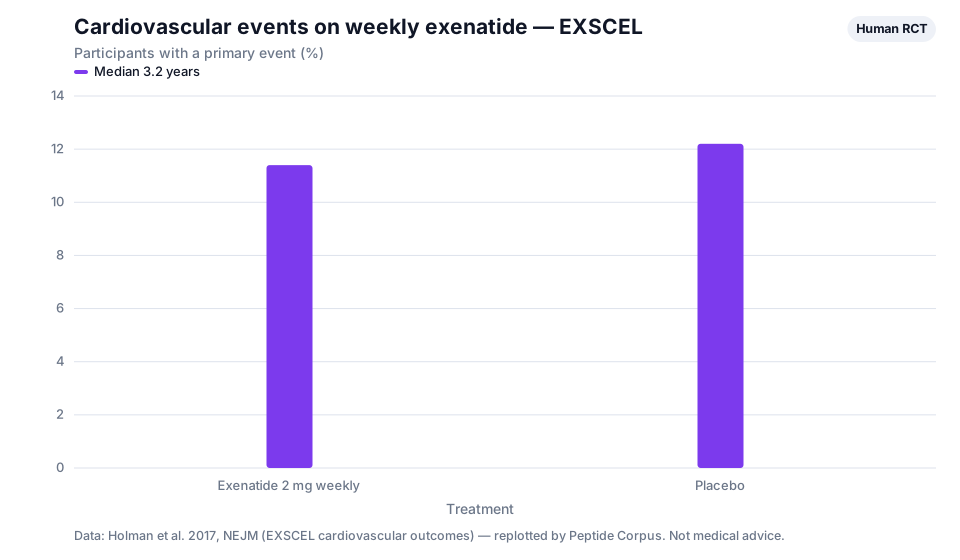
Exenatide is a synthetic copy of a peptide found in the venom of the Gila monster, a desert lizard. The peptide happens to fit the human GLP-1 (glucagon-like peptide-1) receptor, and, the part that turned a curiosity into a medicine, it resists the enzyme that clears the human hormone within minutes. It became the first drug of the class, FDA-approved in 2005 as Byetta for type 2 diabetes, and every human citation on file is randomised, including EXSCEL, a placebo-controlled cardiovascular outcomes trial in 14,752 people. EXSCEL established that exenatide does not raise cardiovascular risk; it missed superiority at p=0.06, and the label carries no cardiovascular indication.
Last updated
Mechanism
Activates the GLP-1 receptor, raising glucose-dependent insulin secretion, suppressing glucagon, and slowing gastric emptying.
Regulatory status
Approved by the FDA. Marketed as BYETTA, EXENATIDE. Earliest approval 2005-04-28. Application NDA021773, ANDA206697.
An approval grades as rung 1 on this site, because 21 CFR 314.126 requires adequate and well-controlled human investigations and one cannot be granted without them. It covers specific indications and doses, though, and does not transfer to other uses of the same molecule.
Reported effects
What sources associate with this compound. Reported categories, not outcomes we have graded — each would need its own citation and rung.
- Glycaemic control research
- Cardiovascular outcome research
- Body weight research
Figures
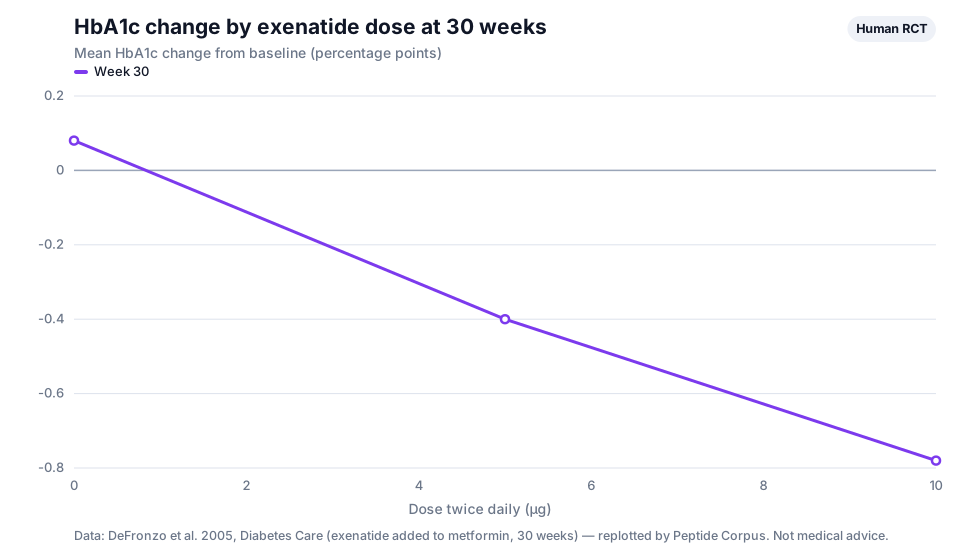
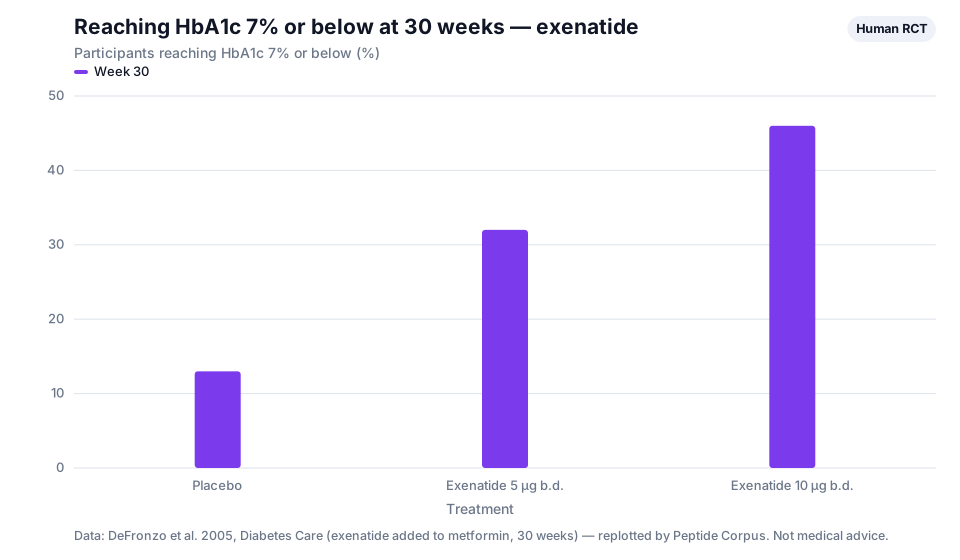
Every figure below is replotted by this site from values published in the cited paper's text or tables — the numbers are the study's, the drawing is ours, and the evidence rung on each image is the rung of its source.
Dosing on file unverified
5 - 10 mcg, 2x/day
Carried from a source that labels it unverified, and reproduced with that label attached. A record of what is reported, not a recommendation. No citation on this page establishes it.
Half-life, storage & sport
- Elimination half-life
- 2.4 hours (human, SC) — study. BYETTA FDA prescribing information, section 12.3.
The half-life on file is 2.4 h, measured subcutaneously. On the schedule this record states — twice daily — each dose has fallen to 3.1% of its own peak by the time the next is given. Nothing accumulates, and there is no loading phase to run.
The rise is not modelled and the axis is not a blood level. No absorption rate constant and no volume of distribution are on file, so each dose appears at full height the instant it is given, and the axis is percent of this compound's own peak.
Literature on file 3
-
human RCT
Effects of Once-Weekly Exenatide on Cardiovascular Outcomes in Type 2 Diabetes (New England Journal of Medicine 2017, cited 1886x) graded on: names a randomised controlled trial — the indexed publication type — “Randomized Controlled”
-
human RCT
Effects of Exenatide (Exendin-4) on Glycemic Control and Weight Over 30 Weeks in Metformin-Treated Patients With Type 2 Diabetes (Diabetes Care 2005, cited 1240x) graded on: names a randomised controlled trial — the indexed publication type — “Randomized Controlled”
-
human RCT
FDA approval NDA021773, ANDA206697 graded on: an FDA approval (NDA021773, ANDA206697), which requires adequate and well-controlled human investigations — “NDA021773, ANDA206697”
Identity
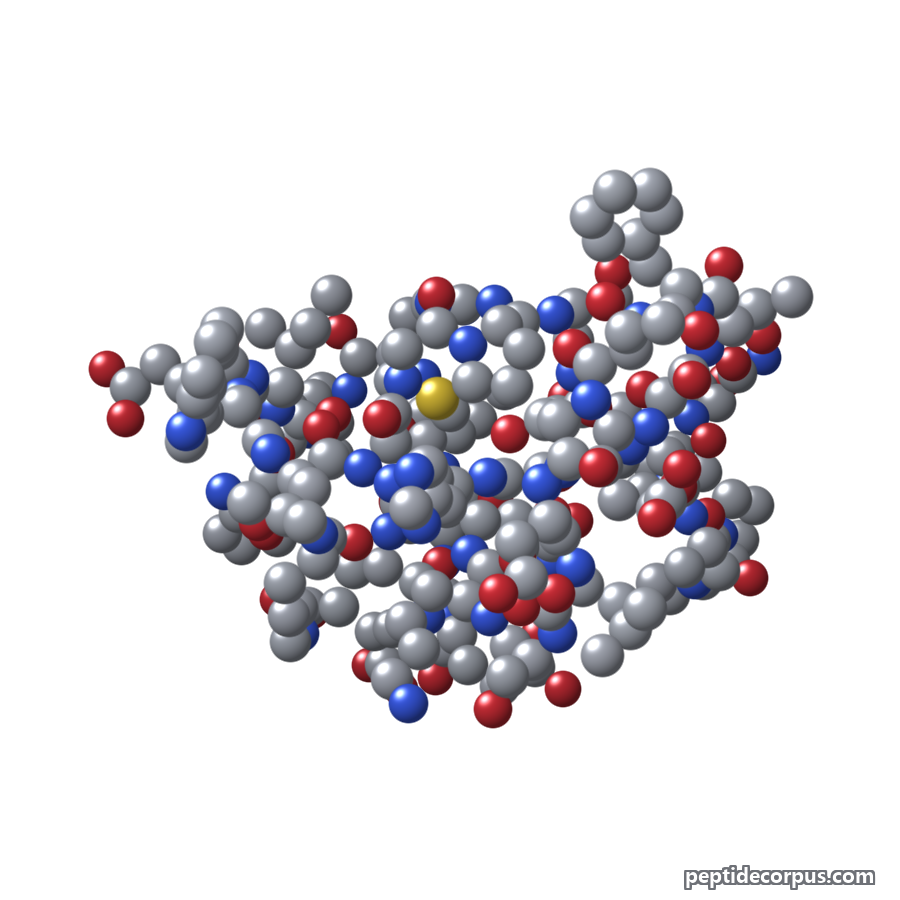
Skeletal formulathe canonical depiction
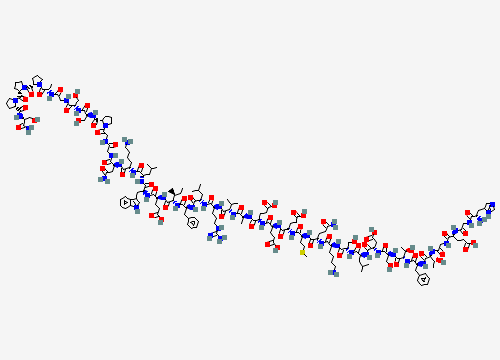
Drawn by PubChem from CID 16157882, the identifier on this record.
- Molecular weight
- 4187
- Molecular formula
- C184H282N50O60S
- PubChem CID
- 16157882
- UniProt
- P26349
- ChEMBL
- CHEMBL414357
- InChI key
- HTQBXNHDCUEHJF-XWLPCZSASA-N
- Sequence
- HGEGTFTSDLSKQMEEEAVRLFIEWLKNGGPSSGAPPPS
- SMILES
- CC[C@H](C)[C@@H](C(=O)N[C@@H](CCC(=O)O)C(=O)N[C@@H](CC1=CNC2=CC=CC=C21)C(=O)N[C@@H](CC(C)C)C(=O)N[C@@H](CCCCN)C(=O)N[C@@H](CC(=O)N)C(=O)NCC(=O)NCC(=O)N3CCC[C@H]3C(=O)N[C@@H](CO)C(=O)N[C@@H](CO)C(=O)NCC(=O)N[C@@H](C)C(=O)N4CCC[C@H]4C(=O)N5CCC[C@H]5C(=O)N6CCC[C@H]6C(=O)N[C@@H](CO)C(=O)N)NC(=O)[C@H](CC7=CC=CC=C7)NC(=O)[C@H](CC(C)C)NC(=O)[C@H](CCCNC(=N)N)NC(=O)[C@H](C(C)C)NC(=O)[C@H](C)NC(=O)[C@H](CCC(=O)O)NC(=O)[C@H](CCC(=O)O)NC(=O)[C@H](CCC(=O)O)NC(=O)[C@H](CCSC)NC(=O)[C@H](CCC(=O)N)NC(=O)[C@H](CCCCN)NC(=O)[C@H](CO)NC(=O)[C@H](CC(C)C)NC(=O)[C@H](CC(=O)O)NC(=O)[C@H](CO)NC(=O)[C@H]([C@@H](C)O)NC(=O)[C@H](CC8=CC=CC=C8)NC(=O)[C@H]([C@@H](C)O)NC(=O)CNC(=O)[C@H](CCC(=O)O)NC(=O)CNC(=O)[C@H](CC9=CN=CN9)N
- InChI
- InChI=1S/C184H282N50O60S/c1-16-94(10)147(178(289)213-114(52-58-144(257)258)163(274)218-121(73-101-77-195-105-39-24-23-38-103(101)105)168(279)215-116(68-90(2)3)165(276)205-107(41-26-28-61-186)158(269)219-122(75-134(189)243)154(265)198-79-135(244)196-83-139(248)231-63-30-43-129(231)175(286)225-127(87-238)174(285)223-125(85-236)155(266)200-80-136(245)202-96(12)181(292)233-65-32-45-131(233)183(294)234-66-33-46-132(234)182(293)232-64-31-44-130(232)176(287)222-124(84-235)150(190)261)229-170(281)119(71-99-34-19-17-20-35-99)217-166(277)117(69-91(4)5)214-159(270)108(42-29-62-194-184(191)192)212-177(288)146(93(8)9)228-151(262)95(11)203-156(267)111(49-55-141(251)252)208-161(272)112(50-56-142(253)254)209-162(273)113(51-57-143(255)256)210-164(275)115(59-67-295-15)211-160(271)110(47-53-133(188)242)207-157(268)106(40-25-27-60-185)206-172(283)126(86-237)224-167(278)118(70-92(6)7)216-169(280)123(76-145(259)260)220-173(284)128(88-239)226-180(291)149(98(14)241)230-171(282)120(72-100-36-21-18-22-37-100)221-179(290)148(97(13)240)227-138(247)82-199-153(264)109(48-54-140(249)250)204-137(246)81-197-152(263)104(187)74-102-78-193-89-201-102/h17-24,34-39,77-78,89-98,104,106-132,146-149,195,235-241H,16,25-33,40-76,79-88,185-187H2,1-15H3,(H2,188,242)(H2,189,243)(H2,190,261)(H,193,201)(H,196,244)(H,197,263)(H,198,265)(H,199,264)(H,200,266)(H,202,245)(H,203,267)(H,204,246)(H,205,276)(H,206,283)(H,207,268)(H,208,272)(H,209,273)(H,210,275)(H,211,271)(H,212,288)(H,213,289)(H,214,270)(H,215,279)(H,216,280)(H,217,277)(H,218,274)(H,219,269)(H,220,284)(H,221,290)(H,222,287)(H,223,285)(H,224,278)(H,225,286)(H,226,291)(H,227,247)(H,228,262)(H,229,281)(H,230,282)(H,249,250)(H,251,252)(H,253,254)(H,255,256)(H,257,258)(H,259,260)(H4,191,192,194)/t94-,95-,96-,97+,98+,104-,106-,107-,108-,109-,110-,111-,112-,113-,114-,115-,116-,117-,118-,119-,120-,121-,122-,123-,124-,125-,126-,127-,128-,129-,130-,131-,132-,146-,147-,148-,149-/m0/s1
Notes unverified prose
FDA-approved
Not on file 1
1 of the 8 fields we track hold nothing on this record, and each says why. A blank field is a bug; a named absence is a finding.
- CAS registry numbernothing we hold supplies it
Each field links to every other record missing the same thing. The full ledger holds 765 gaps across 163 records.
Share this record