Longevity & Cellular Health
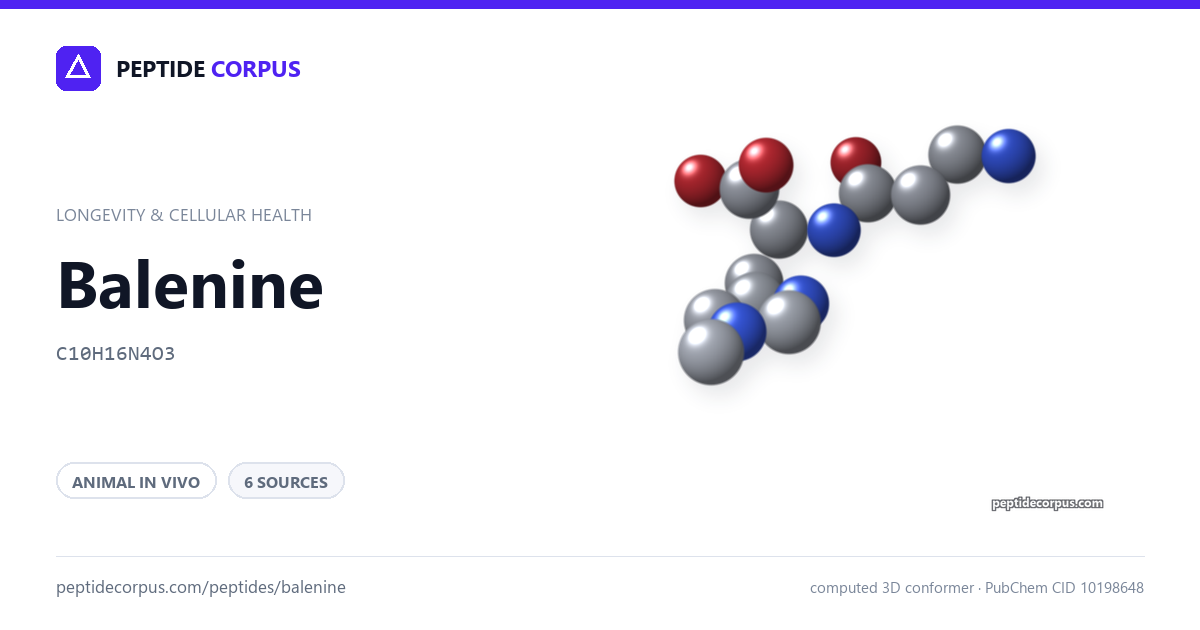
Balenine
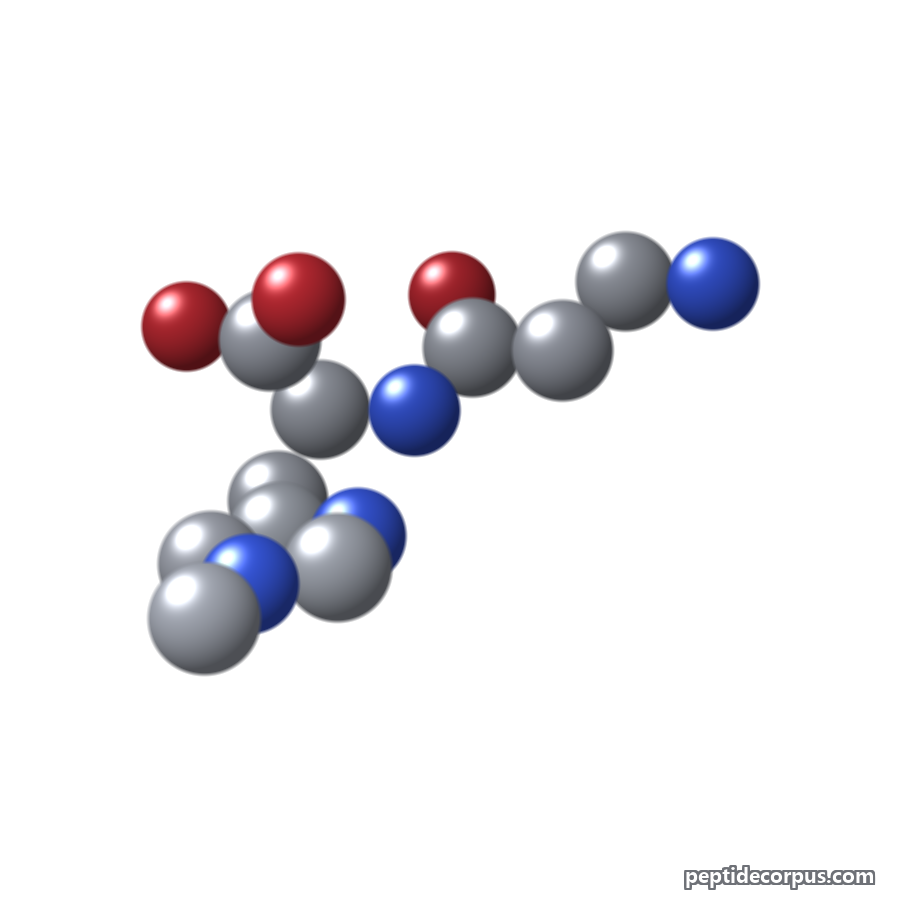
Balenine is the third of the histidine dipeptides, alongside carnosine and anserine, and it was isolated in 1965 from whale-meat extract: it is abundant in whale muscle and in pig muscle, and scarce almost everywhere else. It shares its relatives' chemistry, buffering acid inside the cell and scavenging radicals, and a 2026 mouse study found it reduced neurodegeneration and inflammation in a Parkinson's disease model. Its whole published literature runs to thirty-one papers, which makes it one of the least-examined compounds here. No person has been given it in any study on file, so that mouse result stands as a question rather than a finding.
Last updated
Mechanism
Acts as an intracellular pH buffer and radical scavenger, and raises superoxide dismutase activity in myotubes.
Reported effects
What sources associate with this compound. Reported categories, not outcomes we have graded — each would need its own citation and rung.
- Antioxidant research
- Muscle regeneration research
- Anti-fatigue context
Dosing on file unverified
No established human dose; supplement only
Carried from a source that labels it unverified, and reproduced with that label attached. A record of what is reported, not a recommendation. No citation on this page establishes it.
Literature on file 6
-
review or editorial
Anserine, Balenine, and Ergothioneine: Impact of Histidine-Containing Compounds on Exercise Performance-A Narrative Review. graded on: indexed as "review-article" - secondary literature, not a study — “review-article”
-
animal in vivo
Identification of acryloyl-histidine-related components from heat-denatured imidazole dipeptides and heated meats. graded on: an animal model — read from the indexed abstract — “swine”
-
animal in vivo
Balenine alleviates neurodegeneration and inflammation in a mouse model of Parkinson's disease. graded on: an animal model — “mouse”
-
animal in vivo
Rapid separation and quantification of imidazole dipeptides in meats using a PBr column packed with 3-(pentabromobenzyloxy)propyl group modified silica gel. graded on: an animal model — read from the indexed abstract — “swine”
-
in vitro
Serum Concentrations of Imidazole Dipeptides and Serum Amyloid A in a Bottlenose Dolphin (Tursiops truncatus) with Rhabdomyolysis: Potential Biomarkers for Muscular Damage. graded on: an in-vitro system — read from the indexed abstract — “assay”
Not graded
1 citation whose study design could not be read from the title. Left ungraded rather than guessed at.
- not graded
Identity
Skeletal formulathe canonical depiction
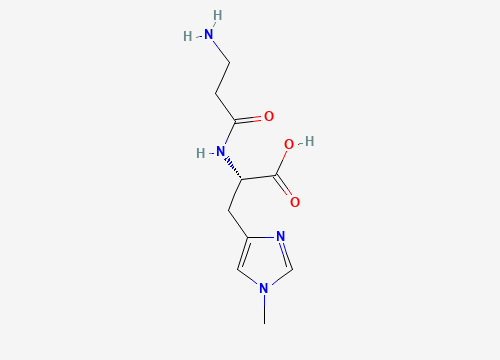
Drawn by PubChem from CID 10198648, the identifier on this record.
- Molecular weight
- 240.26
- Molecular formula
- C10H16N4O3
- CAS number
- 331-38-4
- PubChem CID
- 10198648
- InChI key
- SLRNWACWRVGMKD-QMMMGPOBSA-N
- SMILES
- CN1C=C(N=C1)C[C@@H](C(=O)O)NC(=O)CCN
- InChI
- InChI=1S/C10H16N4O3/c1-14-5-7(12-6-14)4-8(10(16)17)13-9(15)2-3-11/h5-6,8H,2-4,11H2,1H3,(H,13,15)(H,16,17)/t8-/m0/s1
Notes unverified prose
Preclinical; no human clinical trials identified; no human clinical trials
Not on file 2
1 of the 8 fields we track hold nothing on this record, and each says why. 1 further absence is named below. A blank field is a bug; a named absence is a finding.
- amino-acid sequencenot applicable to this compound
- half-lifenothing we hold supplies it
Each field links to every other record missing the same thing. The full ledger holds 765 gaps across 163 records.
Share this record