Longevity & Cellular Health
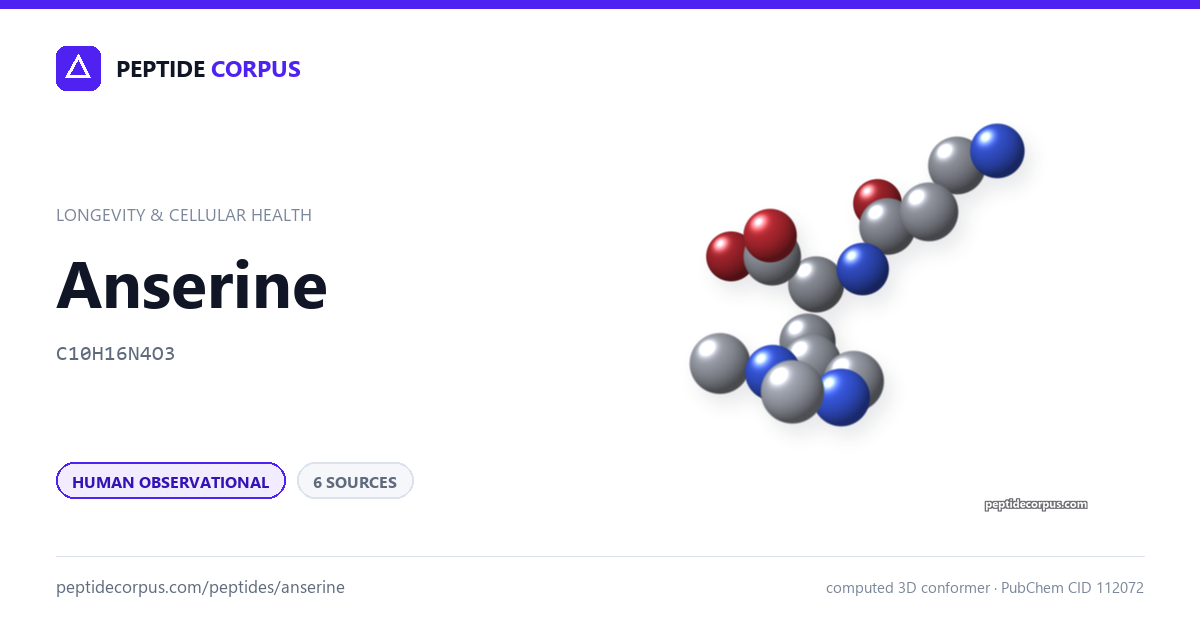
Anserine
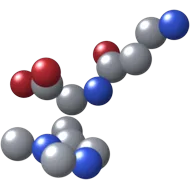
Anserine is a two-amino-acid molecule that occurs naturally in meat and fish, and inside muscle it does two jobs at once: it buffers acid and it mops up the reactive by-products of oxygen metabolism. That second property is why it appears in the longevity aisle, since those same by-products accumulate in ageing tissue, and the animal literature has taken it somewhere unexpected — a 2026 mouse study reports anserine restoring antibacterial immunity in cirrhosis. In people, the highest-graded study attached to it tested an energy drink containing anserine alongside other ingredients, so what an isolated dose does in a person is still an open measurement.
Last updated
Mechanism
Buffers intramuscular pH near neutrality and scavenges free radicals, chelating metal ions and limiting lipid peroxidation.
Reported effects
What sources associate with this compound. Reported categories, not outcomes we have graded — each would need its own citation and rung.
- Muscle pH buffering
- Antioxidant research
- Exercise performance context
Dosing on file unverified
No established human dose; supplement only
Carried from a source that labels it unverified, and reproduced with that label attached. A record of what is reported, not a recommendation. No citation on this page establishes it.
Literature on file 6
-
human RCT
Effects of energy drinks on repeated sprint performance and cognitive function in athletes. graded on: randomised and double-blind — read from the indexed abstract — “double-blind, randomized”
-
human observational
The Effects of Carnosine on Cognitive Function and Mental Health-A Systematic Review and Meta-Analysis. graded on: a synthesis of human studies — “Systematic Review”
-
human observational
Anserine restores antibacterial immunity in cirrhosis via a protective CCL5-mediated hepatocyte-CD44+pDC crosstalk. graded on: an observational human design — read from the indexed abstract — “cohort”
-
animal in vivo
Carnosinylation of Cardiac Antigens Attenuates Immunogenic Responses and Improves Function in Failing Hearts. graded on: an animal model — read from the indexed abstract — “mice”
-
animal in vivo
Identification of acryloyl-histidine-related components from heat-denatured imidazole dipeptides and heated meats. graded on: an animal model — read from the indexed abstract — “swine”
Not graded
1 citation whose study design could not be read from the title. Left ungraded rather than guessed at.
-
not graded
NCT05385003: An Interventional Study for the Beneficial Effects of Prebiotics on Hyperuricemia in Chinese Subjects graded on: NCT05385003 is unknown and has posted no results - a registration, not a reported outcome — “NCT05385003”
Identity
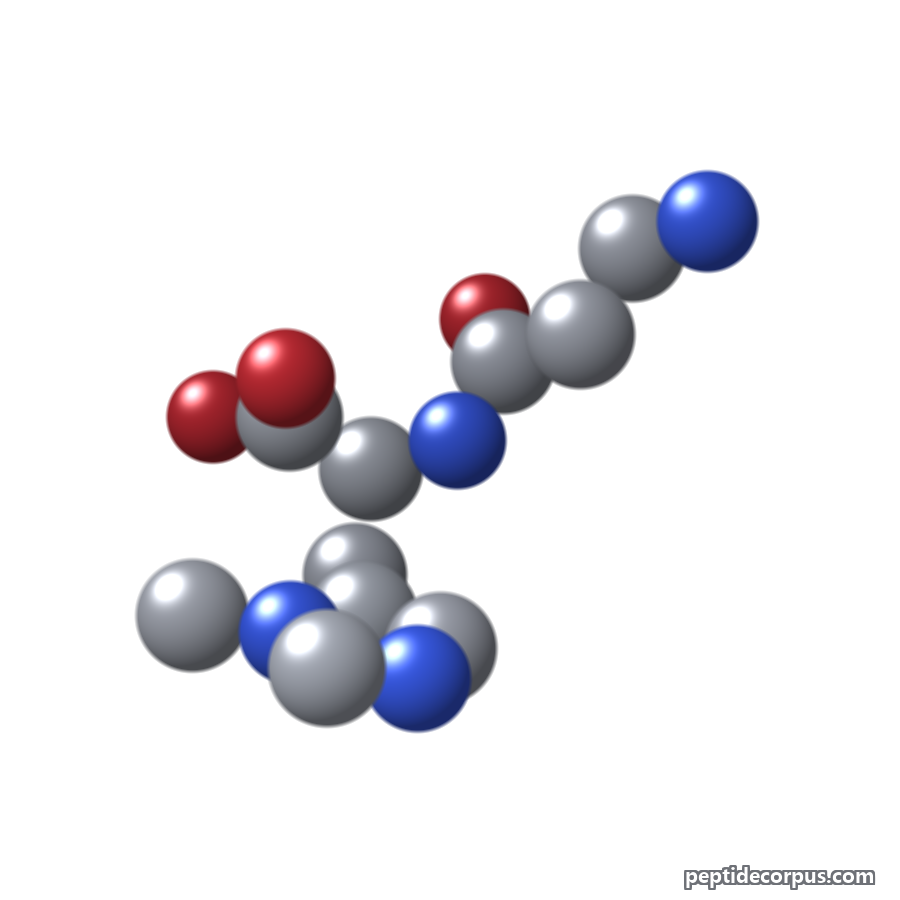
Skeletal formulathe canonical depiction
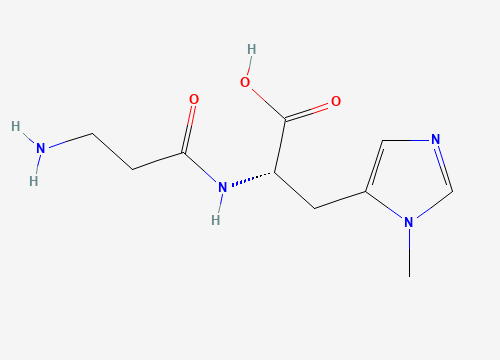
Drawn by PubChem from CID 112072, the identifier on this record.
- Molecular weight
- 240.26
- Molecular formula
- C10H16N4O3
- CAS number
- 584-85-0
- PubChem CID
- 112072
- InChI key
- MYYIAHXIVFADCU-QMMMGPOBSA-N
- SMILES
- CN1C=NC=C1C[C@@H](C(=O)O)NC(=O)CCN
- InChI
- InChI=1S/C10H16N4O3/c1-14-6-12-5-7(14)4-8(10(16)17)13-9(15)2-3-11/h5-6,8H,2-4,11H2,1H3,(H,13,15)(H,16,17)/t8-/m0/s1
Notes unverified prose
Preclinical; no large human RCTs identified; no large human RCTs
Not on file 2
1 of the 8 fields we track hold nothing on this record, and each says why. 1 further absence is named below. A blank field is a bug; a named absence is a finding.
- amino-acid sequencenot applicable to this compound
- half-lifenothing we hold supplies it
Each field links to every other record missing the same thing. The full ledger holds 765 gaps across 163 records.
Share this record